

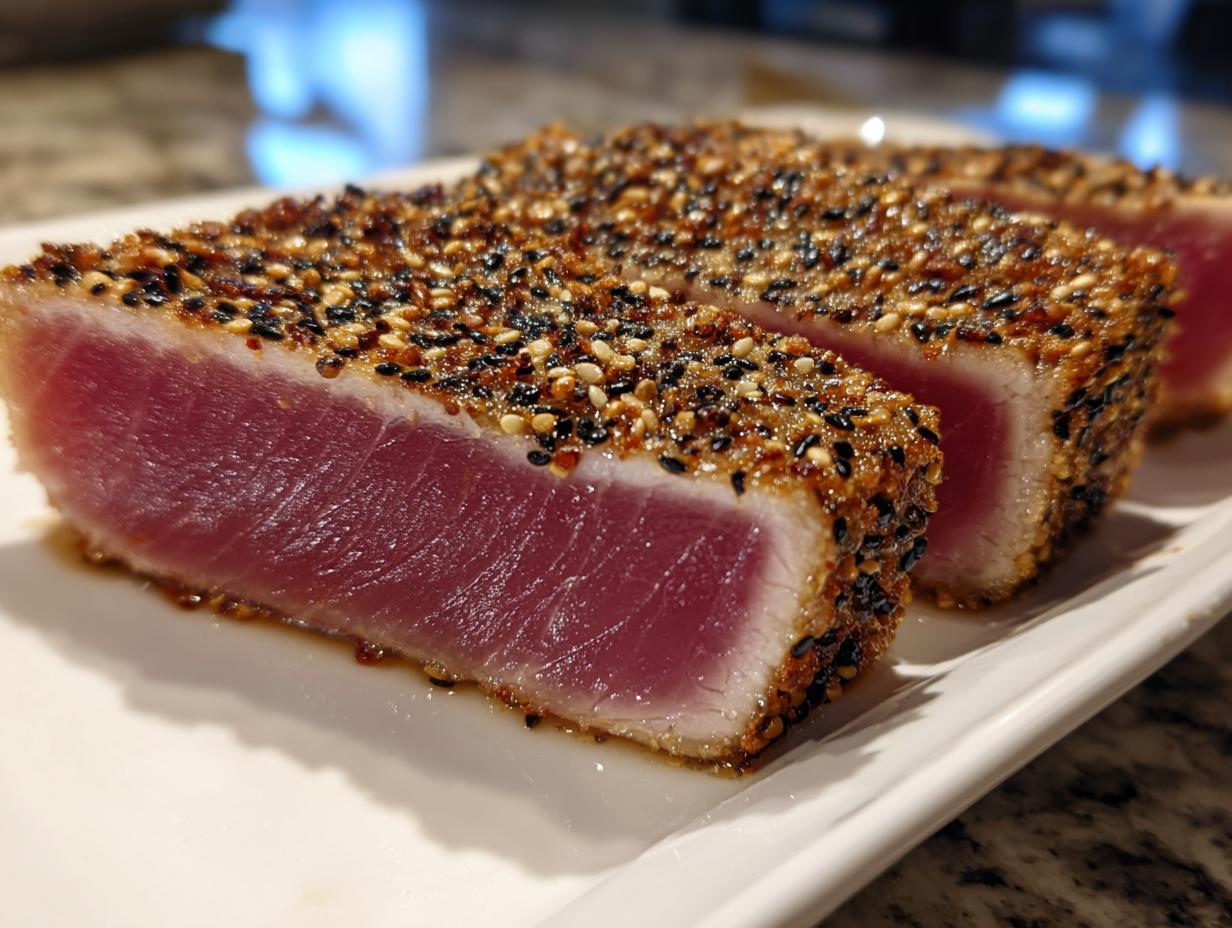
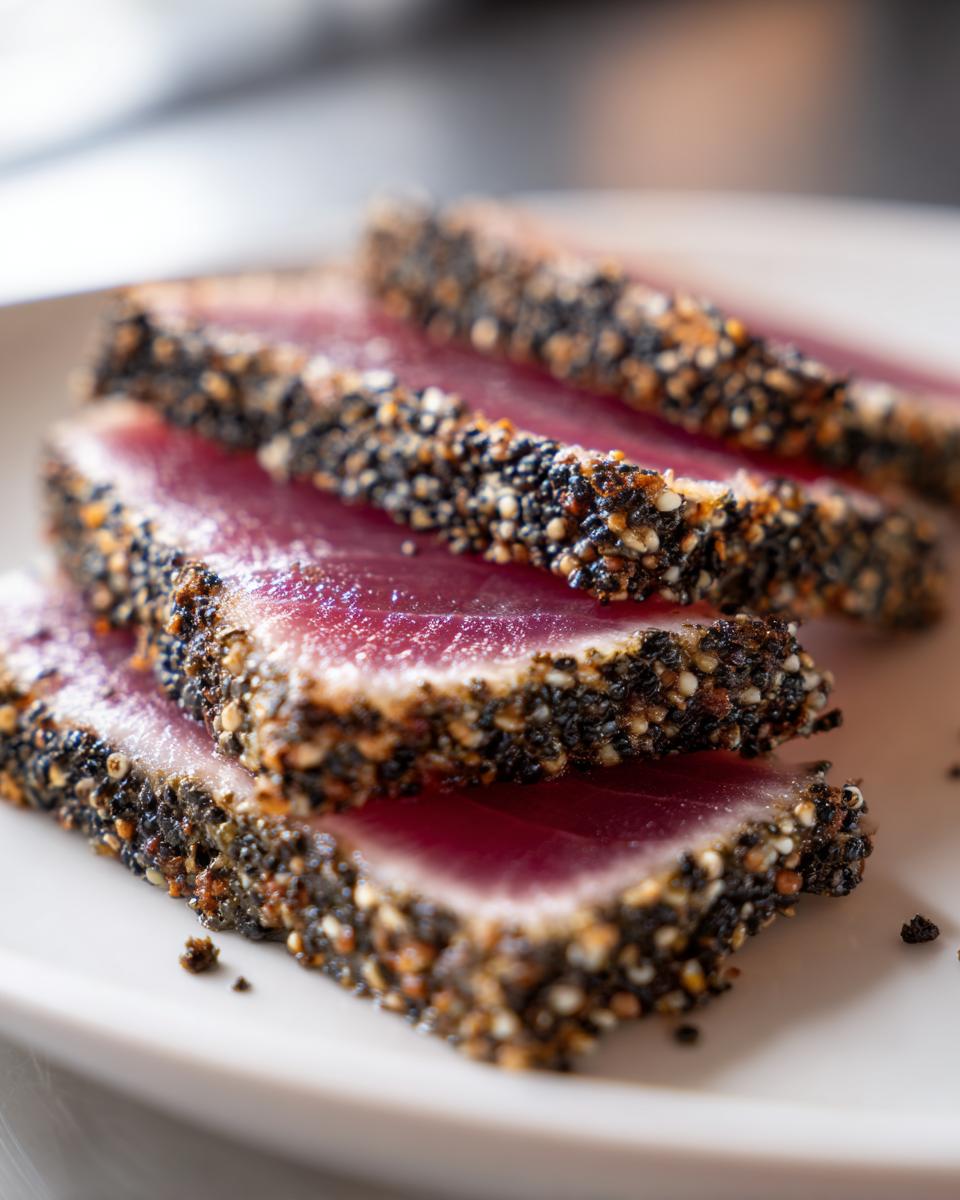
You know how sometimes you crave that amazing, melt-in-your-mouth tuna steak you get at a swanky restaurant, but you just don’t have the time? Well, I cracked the code! Getting restaurant-quality results with **Seared Ahi Tuna** right here in my busy kitchen is actually shocking simple. That’s what Mia’s Meals is all about, right? Taking something that seems fancy and making it totally doable for a weeknight. We are skipping all the fuss to get that perfect, dark crust and keep that gorgeous rare, cool center. Trust me, this quick seafood recipe proves gourmet doesn’t mean complicated!
If you want to read more about why I believe cooking should be a joy, not a chore, you can check out our story here: It all started in Ohio.
- Why You'll Love This Seared Ahi Tuna Recipe
- Essential Ingredients for Perfect Seared Ahi Tuna
- Equipment Needed for Your Seared Ahi Tuna
- Step-by-Step Instructions for Seared Ahi Tuna
- Tips for Success When Making Seared Ahi Tuna
- Serving Suggestions for Your Asian Tuna Recipe
- Storage and Reheating Instructions for Seared Ahi Tuna
- Frequently Asked Questions About Seared Ahi Tuna
- Estimated Nutrition Facts for Seared Ahi Tuna
- Share Your Perfect Seared Ahi Tuna Experience
Why You’ll Love This Seared Ahi Tuna Recipe
Seriously, I wouldn’t put this recipe in the rotation if it wasn’t a winner for busy days. It hits every mark we look for around here at Mia’s Meals—fast, flavorful, and uses quality ingredients without wasting time.
- It’s Lightning Fast: Seriously, the prep is like 10 minutes max, and the actual cooking time is under 3 minutes total. It’s the ultimate quick seafood recipe when you need something impressive fast.
- Restaurant Quality at Home: Achieving that dark, crunchy sesame crust with the perfectly cool pink center feels like magic, but honestly, it’s all about the high heat. You’ll look like a pro!
- Healthy Dinner Hero: This is a fantastic, clean meal. It’s super high in protein and low in fat, making it a genuinely healthy dinner choice that doesn’t leave you feeling weighed down.
- Flavor Explosion: Even though it’s simple, that little bath of ginger, soy, and sesame oil infuses so much flavor into the fish. It feels gourmet without needing ten different spices.
Essential Ingredients for Perfect Seared Ahi Tuna
When you’re cooking seafood this clean, the quality of what you buy really shines through. Forget filler ingredients; we are focusing on making the fish the star! You only need a few simple things for this Asian tuna recipe, but two of them are non-negotiable for safety and that beautiful texture we are after.
Here is what you’ll need to grab:
- Two (6-ounce) portions of really, really good **sushi-grade tuna** steaks. Pick the best looking yellowfin you can find!
- Two tablespoons of sesame oil—the toasted kind, please!
- One tablespoon of soy sauce or tamari.
- One teaspoon of grated fresh ginger—use your own hands for grating!
- One garlic clove, minced up very fine.
- Half a teaspoon of black pepper.
- A quarter cup of mixed black and white sesame seeds.
Ingredient Notes and Substitutions for Seared Ahi Tuna
Let’s talk about that tuna first. When I say sushi grade, I really mean it. Because we are only searing the outside, you need to be absolutely sure you are getting the freshest fish possible. Don’t just grab any yellowfin tuna from the regular counter section—ask your fishmonger specifically for fish that is safe to eat raw.
For the liquid, if you or someone you are cooking for can’t have gluten, swapping the soy sauce for tamari is an easy fix. It brings the same salty, umami depth. Also, if you forget the black sesame seeds, don’t sweat it! White ones work just fine, but the mixed look is so much prettier on that final plate.
Equipment Needed for Your Seared Ahi Tuna
Okay, so you’ve got your beautiful fish ready to go, but you need the right tools to get that perfect sear. Trust me when I say that the pan you use matters way more than you think for this Asian tuna recipe. You want something strong that holds heat like crazy!
Here’s my short list of must-haves for this quick seafood recipe:
- Your Heaviest Skillet: This is crucial! I use my 10-inch cast iron skillet. It holds the intense heat required to flash-sear the outside instantly without cooking the middle. If you don’t have cast iron, use the thickest stainless steel skillet you own, but make sure it’s heavy-bottomed.
- Paper Towels: Don’t even think about skipping paper towels! We need the tuna steaks bone-dry before they even whisper hello to that hot pan.
- Shallow Plate for Coating: You need a plate wide enough to spread out those sesame seeds so you can press the fish firmly into them, getting an even coat all the way around.
- A Good Timer: Since we are talking 60 to 90 seconds per side for perfection, you need accurate timing. Guessing here will result in overcooked fish, and we definitely don’t want that!
That’s honestly it! No fancy thermometers or complicated gadgets needed. Just a hot pan and some attention. It’s proof that a stunning, healthy dinner can come together with basic kitchen tools.
Step-by-Step Instructions for Seared Ahi Tuna
I know cooking raw-ish fish can feel intimidating, but stick to these steps and you’ll be amazed. The entire cooking process for this **Seared Ahi Tuna** is over in a flash because we are using maximum heat. It’s all about speed! Remember what I always preach? Preparation is half the battle, and for tuna, drying it is the most important preparation step you can do.
Preparing the Yellowfin Tuna Steaks for Seared Ahi Tuna
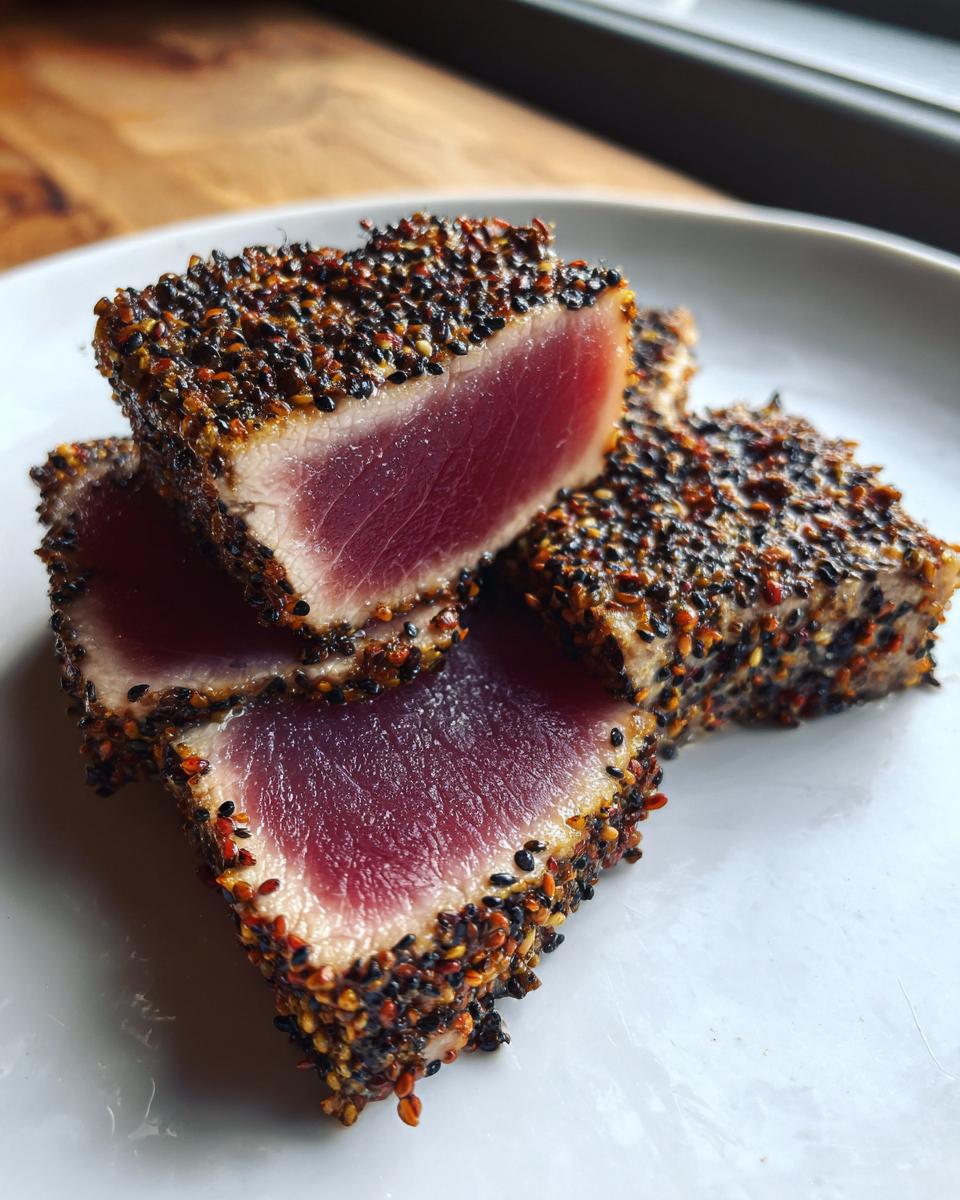
First things first: grab those paper towels. You need to pat your **yellowfin tuna** steaks until they are absolutely, completely dry on all sides. I mean it—if there is any moisture left, it will steam those gorgeous steaks instead of searing them. Once they are dry, whisk up that simple marinade of sesame oil, soy sauce, ginger, garlic, and pepper. Brush it lightly all over. Then comes the fun part: the seeds! I lay out my mixed sesame seeds on a plate and just firmly press each side of the tuna steak into them. You want a nice, thick, even coating wrapping around that fish. This seed layer is what gives you that amazing crunch!
Mastering the High-Heat Sear for Gourmet Tuna
Now for the showstopper! Get your cast iron skillet ripping hot—I’m talking almost smoking, seriously high heat. Don’t add any oil to the pan itself! Carefully place your coated steaks down. You’ll hear a big sizzle, which is exactly what you want. For that perfect **gourmet tuna** look—a dark crust and a rare interior—you only sear them for about 60 to 90 seconds per side. Don’t poke them or try to move them around while searing; let that crust develop undisturbed! Immediately pull them out when the time is up and let them rest on a clean cutting board for about five minutes. This resting time is crucial so the juices stay inside when you slice.
Tips for Success When Making Seared Ahi Tuna
Even though this recipe for **Seared Ahi Tuna** is straightforward, a couple of little tricks can take it from good to absolutely incredible. Remember, since we aren’t cooking this fish all the way through, technique is everything. I picked these up after ruining my first few batches, so pay attention!
Here are my absolute top tips to guarantee your tuna isn’t just okay, but amazing:
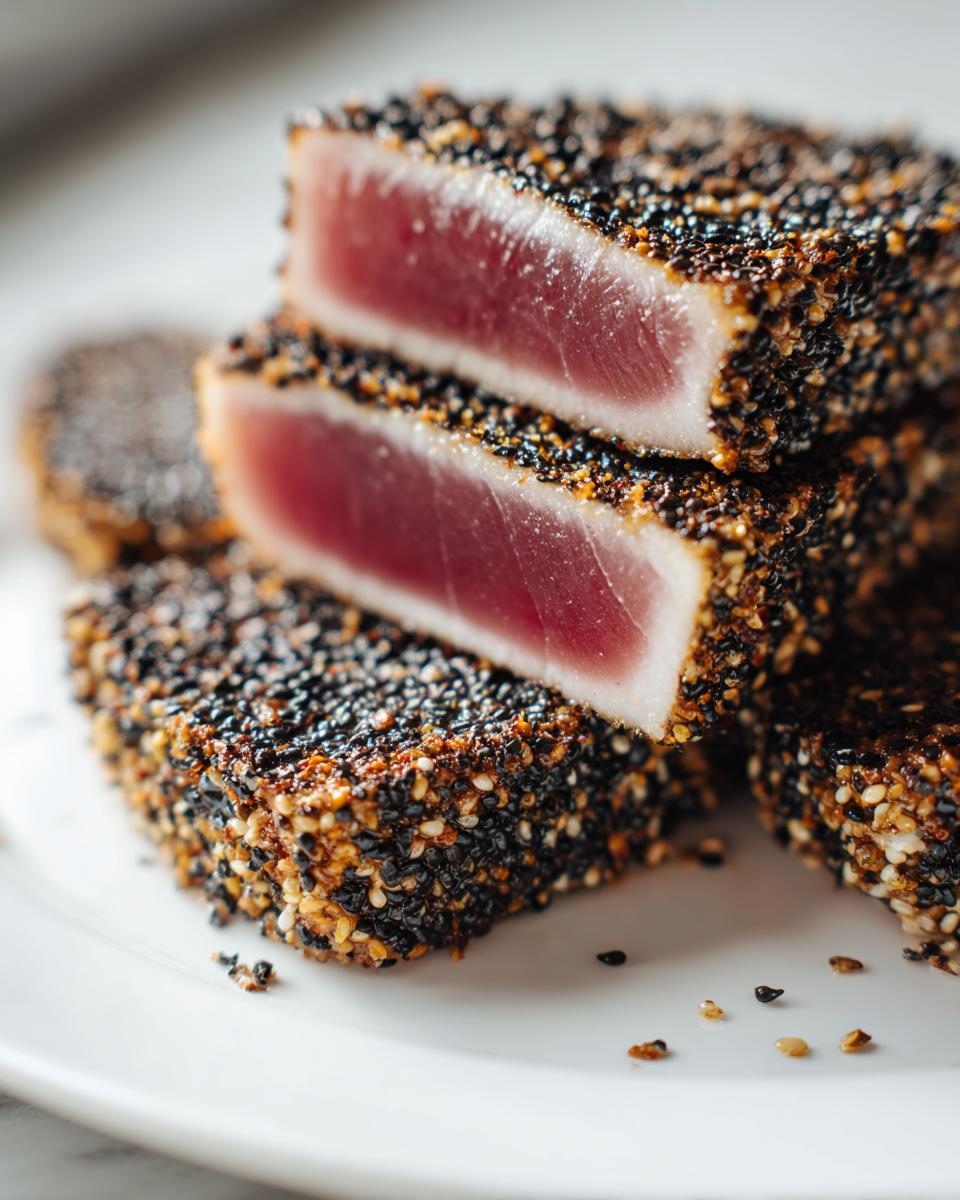
- Don’t Skip the Rest Period! I see people getting too excited right when the tuna comes off the heat. Wait the full five minutes! Letting the tuna rest allows those juices, which were pushed to the center by the intense heat, to redistribute throughout the steak. If you slice too soon, all that flavor just runs out onto your cutting board.
- Slice Against the Grain, Always: This is critical for texture. Look closely at the steak and you will see the muscle fibers running in one direction. You need to slice perpendicular to those lines—this is called slicing against the grain. It shortens those tough fibers, making every single bite incredibly tender and chewy in a good way.
- Keep Your Seeds Crunchy: While mixing the marinade into the oil is fine right before coating, don’t let the coated tuna steaks sit around waiting for the pan to get hot. The marinade will start to soak in and soften that beautiful sesame seed crust we worked so hard to create. Once it’s breaded, get it into the pan fast!
- Go High or Go Home: I mentioned it before, but it bears repeating: your skillet needs to be screaming hot. If you have a smoky pan, you’ve got it right. If you are nervous about the heat and use medium heat, you’ll end up with gray, lukewarm fish instead of that beautiful, dark, satisfying crust that defines perfect **Seared Ahi Tuna**.
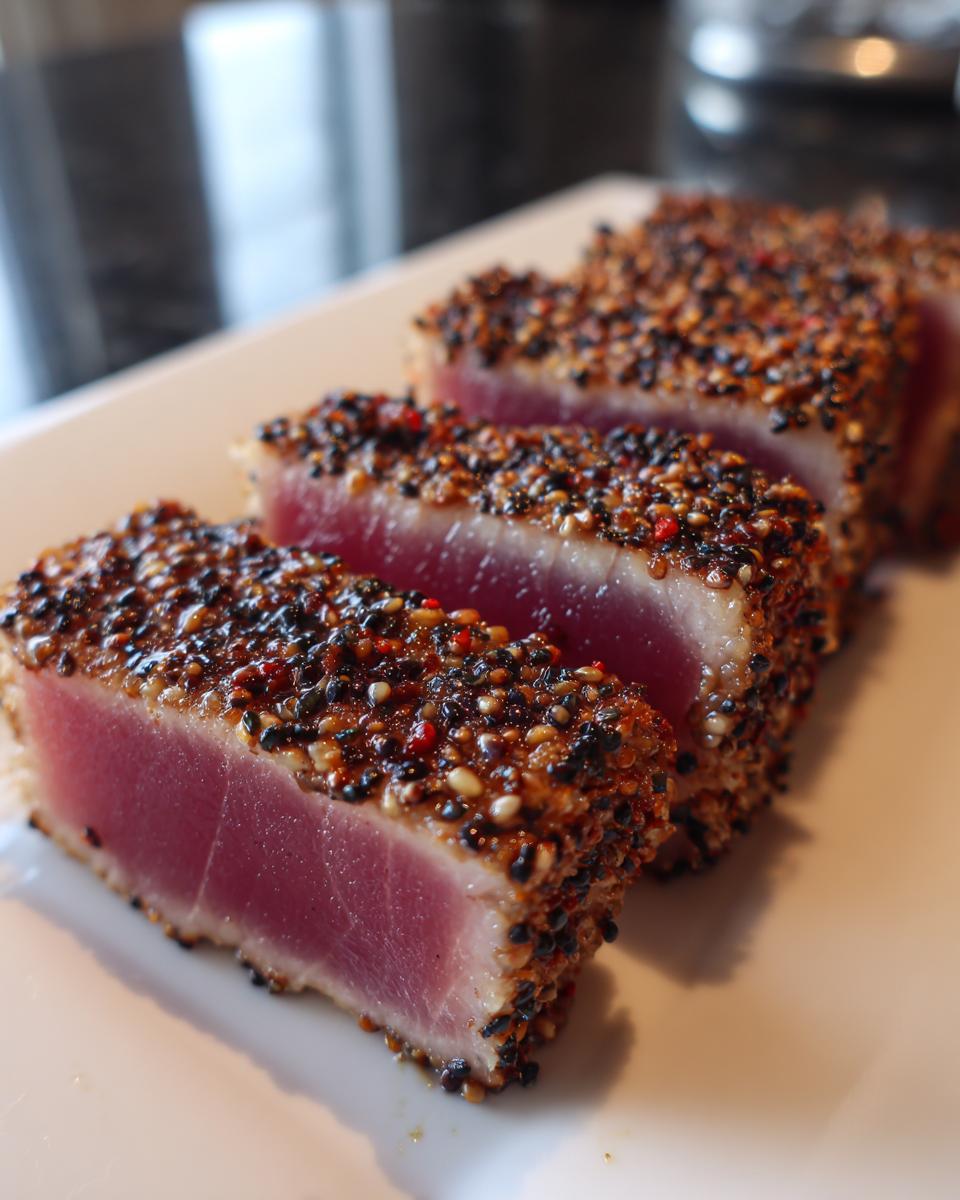
Serving Suggestions for Your Asian Tuna Recipe
So, you’ve made this stunning, quick seafood recipe, and now you need something equally wonderful to put it on! That rich, savory crust from the seared fish begs for simple companions that won’t compete with its flavor. Since this is a really light and healthy dinner, we want sides that match that vibe.
Here are a few ways I love to plate up this Asian tuna recipe to make it a complete, beautiful meal:
- Honestly, the easiest thing is a bed of perfect, fluffy rice. I often use short-grain sushi rice because it has a little bit of stickiness that’s great for catching those yummy drips of soy sauce and sesame oil left on the plate.
- If you’re watching carbs, a simple mound of lightly dressed greens is fantastic. Think thinly sliced cucumbers or shaved carrots tossed with just a little rice vinegar and a tiny drizzle of the leftover marinade—nothing heavy!
- For an extra Asian twist, try serving those slices right over a bed of blanched, slightly crisp green beans dressed with toasted sesame oil. They add a nice snap that contrasts well with the tender fish.
- If you want a bit more substance but still want to keep it light, some quick-sautéed baby bok choy works wonders. Just toss it in the wok for three minutes with a splash of water and a tiny bit of crushed garlic.
The idea is simple: whatever you serve it with should complement the fish, not drown it out. Keep the colors bright and the flavors clean!
Storage and Reheating Instructions for Seared Ahi Tuna
Okay, let’s talk about leftovers, because sometimes we cook a little too much of this incredible **Seared Ahi Tuna**, right? And that’s fine! This dish is genuinely best enjoyed fresh off the cutting board, but if you have some leftover slices, you just need to handle them right.
First rule, and I can’t stress this enough for your **Seared Ahi Tuna**: do not try to reheat it! Seriously, don’t even think about putting those slices back near a stove or in the microwave. If you reheat it, that beautiful, rare, cool center you worked so hard for is just going to turn into dry, gray, cooked tuna steak, and that defeats the whole gourmet purpose!
So, when storing, keep it simple:
- Make sure the slices have cooled down completely before you put them away.
- Tuck the leftover tuna into a truly airtight container. I like the glass ones because they don’t hold onto any lingering smells.
- Keep that container in the coldest part of your fridge. It should still taste pretty great for a day, maybe two days max.
When you go to eat the leftovers, just eat them cold! They are fantastic straight from the fridge, maybe tossed into a crisp salad or maybe just enjoyed standing over the sink like I sometimes do when no one is looking. It’s still delicious, but remember, the star quality is always in that fresh sear.
Frequently Asked Questions About Seared Ahi Tuna
I know sometimes reading through a recipe, you just have little specific questions pop into your head, especially when dealing with something like **Seared Ahi Tuna**. We want it perfect, right? So, I gathered up the things I hear most often from folks trying this for the first time. Don’t hesitate to reach out if you have another question—you can always send me a message!
Can I use frozen tuna for this Seared Ahi Tuna recipe?
This is a big one, and my answer is mostly no, because quality matters so much here. If you are planning on getting that beautiful, rare center from this **quick seafood recipe**, you really need to start with fresh, never-frozen, **sushi grade tuna**. The freezing and thawing process, even if done correctly, can sometimes mess with the texture, making it mushy when you sear it. If you absolutely must buy frozen, you need to thaw it incredibly slowly in the refrigerator for at least 24 hours, and then pat it incredibly dry again. But honestly, for the best result, go for fresh!
What internal temperature should my yellowfin tuna reach?
See, this is where tuna is different from steak! We aren’t aiming for a specific number like 130°F; we are aiming for a feeling! For a perfect **yellowfin tuna**, the goal is a crust on the outside—that dark, spicy wrap—and the inside should remain completely cool and rare, almost like sashimi. If you sear for about 60 to 90 seconds per side on high heat, you’ll achieve that perfect texture. If you check it with a thermometer, the center should definitely be just above room temperature, but still look vividly pink or red inside. If you cook the entire **Seared Ahi Tuna** steak through, you’ve got a very expensive piece of fish that tastes dry!
Is this recipe for Seared Ahi Tuna safe if my fish isn’t labeled ‘sushi grade’?
If your fish isn’t definitely labeled and sold to you as sushi-grade, I would strongly advise against making this recipe exactly as written. Since we only cook the outside, the interior remains essentially raw. For safety, especially when serving this as a **healthy dinner** centerpiece, you must have fish that has been handled and flash-frozen (if applicable) specifically to kill any parasites, which is what the sushi-grade label confirms. If you are unsure, you can always cook the tuna steak until it’s medium-well, but you’ll lose that signature texture we love in a proper **gourmet tuna** preparation.
Estimated Nutrition Facts for Seared Ahi Tuna
When you are making something this simple and pure, the nutrition profile is usually fantastic! Since this is a quick seafood recipe that’s naturally low in things we try to limit, it makes for a wonderful, guilt-free meal. This is based on one serving of the Tuna steak, seasoned as directed.
Please remember that these are just estimates based on standard sizing for the fish and the oils we called for. If you use extra soy sauce or a different type of oil, the counts will shift a bit, but this gives you a great ballpark idea of why this is such a fantastic, healthy dinner option.
- Calories: Around 280 per serving. A great, medium-sized meal!
- Protein Powerhouse: You get about 33 grams of protein here. That’s huge for keeping you full and satisfied for hours.
- Fat Content: Total fat is about 14 grams, but most of that is the healthy unsaturated kind from that lovely sesame oil we used.
- Carbs and Sugar: It’s very low in carbohydrates, only about 5 grams total, and the sugar is minimal, coming mostly from the little bit of soy sauce.
Because we are focusing on the fish itself, you get all those wonderful omega-3s without any heavy sauces or breading to weigh you down. It really lets the quality of that **sushi grade tuna** shine through!
If you ever have questions about how we handle your information, you can always review our Privacy Policy right here: Review Privacy Policy.
Share Your Perfect Seared Ahi Tuna Experience
I truly hope you give this **Seared Ahi Tuna** a try soon! I mean it, making this delicious, gourmet tuna at home is so rewarding, and I just get so excited when I hear from you folks about how it turned out. That moment when you slice into the steak and see that perfect cool center? Priceless!
Don’t keep that success to yourself! When you make this recipe, I’d love for you to come right back here and leave a rating down below in the comments section. Tell me how long you seared it for—were you a speedy 60-second specialist, or did you give it the full 90? Little details like that help other home cooks build confidence!
If you snap a gorgeous photo of your final plate—especially if you paired it with one of my simple rice suggestions or some quick greens—please tag us over on social media! We absolutely adore seeing Mia’s Meals concepts show up in your busy, happy homes. We are always running on a philosophy of building connections through good food, and sharing your creation is the best connection we can ask for!
If you want to know more about the rules of using recipes and content from our site, you can check out the terms here: Terms of Use. Now go enjoy that amazing **Seared Ahi Tuna**!
PrintPerfectly Seared Ahi Tuna Steaks
Learn how to quickly sear sushi-grade Ahi tuna to achieve a flavorful crust and a rare, cool center. This is a quick seafood recipe perfect for a healthy dinner.
- Prep Time: 10 min
- Cook Time: 3 min
- Total Time: 18 min
- Yield: 2 servings 1x
- Category: Dinner
- Method: Pan-Searing
- Cuisine: Asian-Inspired
- Diet: Low Fat
Ingredients
- 2 (6-ounce) sushi-grade Ahi tuna steaks
- 2 tablespoons sesame oil
- 1 tablespoon soy sauce or tamari
- 1 teaspoon grated fresh ginger
- 1 clove garlic, minced
- 1/2 teaspoon black pepper
- 1/4 cup sesame seeds (mixed black and white)
Instructions
- Pat the tuna steaks completely dry using paper towels. This step is crucial for a good sear.
- In a small bowl, whisk together the sesame oil, soy sauce, ginger, minced garlic, and black pepper. Brush this mixture evenly over all sides of the tuna steaks.
- Place the sesame seeds on a shallow plate. Press each side of the tuna steaks into the seeds until they are fully coated.
- Heat a heavy-bottomed skillet, such as cast iron, over high heat until it is very hot, almost smoking.
- Carefully place the coated tuna steaks in the hot, dry skillet. Sear for 60 to 90 seconds per side for rare, or up to 2 minutes per side for medium-rare. Do not move the tuna while searing.
- Remove the tuna from the skillet immediately. Let the steaks rest on a cutting board for 5 minutes before slicing against the grain into 1/4-inch thick pieces.
Notes
- For best results, use yellowfin or bigeye tuna that is truly sushi grade.
- If you prefer a dipping sauce, mix 2 tablespoons soy sauce with 1 teaspoon rice vinegar and a pinch of red pepper flakes.
- Slicing the tuna thinly against the grain makes it easier to eat and improves texture.
Nutrition
- Serving Size: 1 steak
- Calories: 280
- Sugar: 1
- Sodium: 350
- Fat: 14
- Saturated Fat: 2
- Unsaturated Fat: 12
- Trans Fat: 0
- Carbohydrates: 5
- Fiber: 1
- Protein: 33
- Cholesterol: 75