

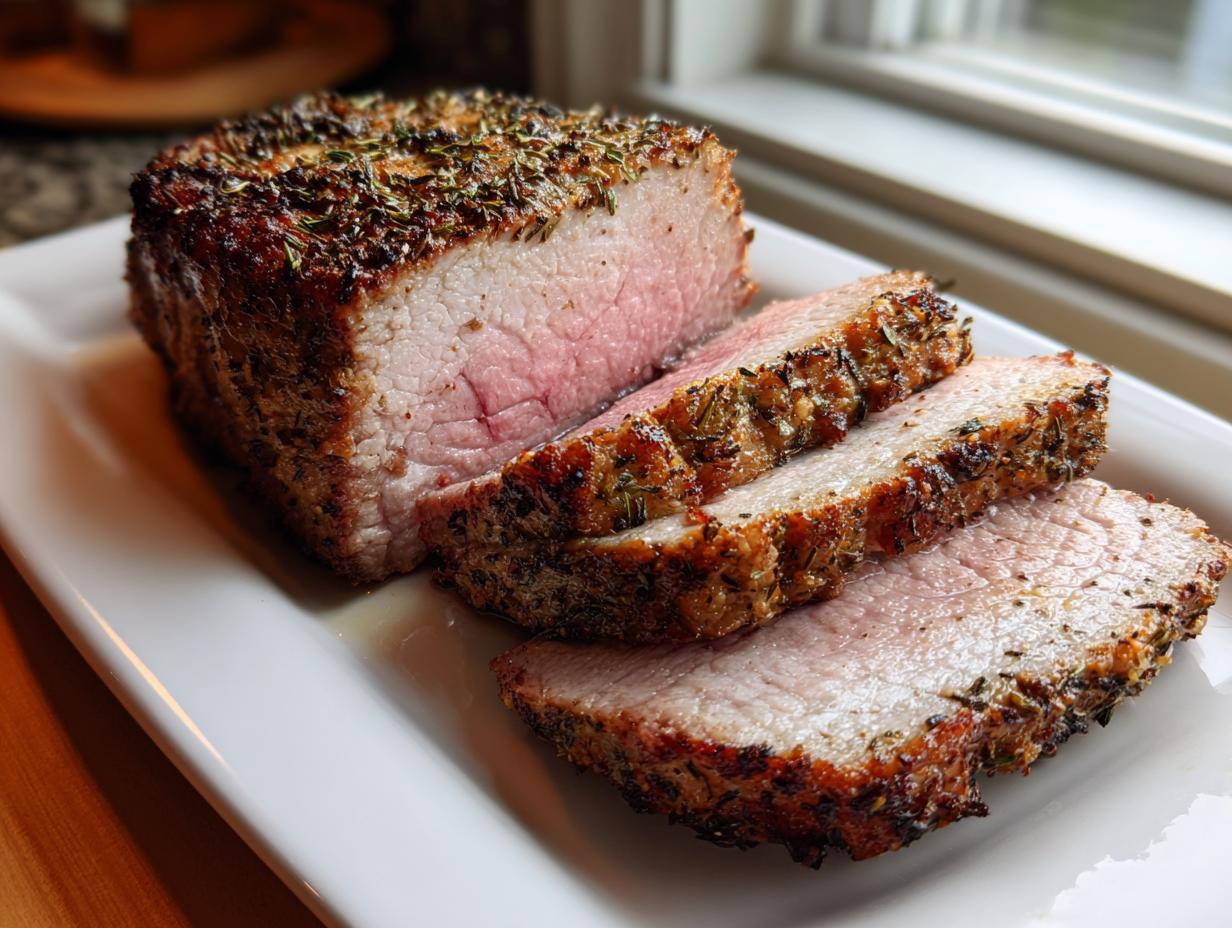
Oh, I totally get it. That five o’clock scramble when you need a real, satisfying dinner on the table but you just don’t have the energy for complicated steps. That’s exactly why Mia’s Meals started, you know? We’re all about simplifying those classic, heartwarming meals without sacrificing flavor. Forget dry, disappointing meat! This simple, super-easy **pork loin roast** is my go-to when I need something that feels like a big Sunday dinner but takes total hands-on time under 20 minutes. I promise you, this oven-roasted technique locks in all the moisture, giving you the best, juiciest pork loin you’ve ever made. Trust me, this is the answer to your weekday-to-weekend dinner dilemmas!
- Why This Simple Pork Loin Roast Delivers a Juicy Pork Loin
- Ingredients for Your Simple Pork Loin Roast
- Equipment Needed for Oven Roasted Pork
- Step-by-Step Instructions for a Juicy Pork Loin Roast
- Making a Simple Pan Sauce Gravy for Your Pork Loin Roast
- Tips for Success When Making Pork Loin Roast
- Frequently Asked Questions About Your Pork Loin Roast
- Storage and Reheating Instructions for Leftover Pork Loin Roast
- Serving Suggestions for Your Oven Roasted Pork
Why This Simple Pork Loin Roast Delivers a Juicy Pork Loin
I know what you’re thinking—pork loin can dry out so easily. Not this one! This recipe is proof that you don’t need five hours and a dozen herbs to get that perfect, tender result. We keep it short and sweet because the method does all the heavy lifting for you. It’s reliable, every single time.
- It’s fast! Seriously fast, meaning it pulls its weight for a busy weeknight dinner.
- The two-stage temperature roasting locks in juices so you get that guaranteed juicy pork loin.
- Only about five spices, meaning you probably have everything in your cupboard right now.
Perfect for an Easy Pork Dinner or Sunday Roast Recipe
This is like the chameleon of dinner ideas. Need a **pork loin roast** on a Tuesday? Throw it in. Want something impressive on a Sunday but hate waking up early? This fits perfectly. Because we use so few ingredients, the quality of the pork itself shines through, making it feel fancy even though it’s genuinely an easy pork dinner to pull off.
Ingredients for Your Simple Pork Loin Roast
See, this is where the magic starts—and where we keep things unbelievably simple! When you’re looking for an **easy pork dinner**, you don’t need a spice cabinet explosion. We are only using six things here, plus the star of the show, of course. Because we’re keeping the flavor profile clean, the roasting time hinges pretty heavily on the size of your **pork loin roast**. We are aiming for about 3 pounds here, which is perfect for 6 people, or enough leftovers for lunch the next day!
Here’s what you absolutely need to gather before you touch that meat:
- A 3-pound pork loin roast—make sure it is specified as bone-out so it cooks evenly.
- One tablespoon of good olive oil—use whatever you normally cook with.
- One teaspoon of kosher salt. Don’t use table salt; kosher granules help create that nice exterior crust.
- One teaspoon of black pepper.
- One teaspoon of garlic powder. The powdered version helps coat everything evenly.
- One teaspoon of dried thyme.
Ingredient Notes and Substitutions
Just a couple of quick notes about these basics so you get that juicy pork loin every time. First off, the timing is based on a 3-pound, bone-out roast. If yours is bigger, just remember the rule we talk about later regarding the **pork loin internal temp**—that’s your real guide!
Also, about the herbs: Thyme is so nice here because it’s earthy but doesn’t overpower the meat. If you’re all out of dried thyme, or if you just feel like shaking things up, dried rosemary is a fantastic substitute! They both play really nicely with pork when roasted in the oven.
Equipment Needed for Oven Roasted Pork
Okay, listen, as much as I love the idea of cooking on coals over an open fire, we are keeping this **easy pork dinner** real—meaning we’re using tools you already have! You don’t need a fancy rotisserie setup or a complicated Dutch oven for this. In fact, having the right, simple tools actually makes hitting that perfect **pork loin internal temp** much easier, which is key for that juicy pork loin we are aiming for.
Here are the absolute must-haves for this **oven roasted pork**:**
- A roasting pan or a sturdy, rimmed baking sheet. You need something with a slight lip to catch those tasty drippings. That’s flavor gold for our later sauce!
- Paper towels. Seriously, don’t skip patting the pork dry. This is one of the simplest secrets to getting a nice brown crust on your **pork loin roast**.
- The MVP of the kitchen: an instant-read meat thermometer. I cannot stress this enough. Guessing is how you end up with dry pork. This tool saves the day and guarantees your meat is safe and perfectly done at 145°F.
- Aluminum foil for resting. It’s just a sheet, but trust me, tenting the meat with this foil after it leaves the oven is non-negotiable for tenderness!
Step-by-Step Instructions for a Juicy Pork Loin Roast
Alright, here’s where the magic happens! This process might look like a lot of steps, but I promise it flows really fast, and it’s the secret to that incredible, non-dry result we are chasing. Remember my mission? Simplify flavor! This two-temperature approach might sound fancy, but it’s really just about giving the roast a quick blast of heat to seal in flavor and then relaxing it down to cook gently.
If you’re curious about the foundational philosophy behind why simplicity works so well in cooking, you can read a bit more about my approach over on the About Page. But for now, grab your pan and let’s get cooking this absolutely perfect **pork loin roast**!
Preparing the Seasoning Rub for Your Pork Loin Roast
First things first, you have to prep that pork! Grab a stack of paper towels and just blot that roast all over. Seriously, every single bit of moisture needs to go. This drying action is what ensures you don’t end up with pale, steamed pork; we want nice color!
Next, take a tiny bowl and mix that olive oil with the salt, pepper, garlic powder, and thyme. Just stir it around until it looks like a slightly wet paste. Then, take your hands—this part is messy but fun—and rub that mixture all over the surface of the pork loin. Make sure you get the ends too. Give it a good massage!
Achieving the Perfect Pork Loin Internal Temp
Now we hit the oven with two different temperatures. Preheat your oven to a hot 400 degrees Fahrenheit first. Place your seasoned roast in the pan and let it roast hard for about 15 minutes. This initial heat is fantastic for browning the outside and locking everything in. After that, without even opening the door if you can help it, drop that oven temp down to 350 degrees.
From here on out, you cannot trust the clock alone! You absolutely must rely on your thermometer. For a 3-pound roast, you’re usually looking at about 20 to 25 minutes per pound once you drop the heat, but that’s just an estimate. You pull this beauty out the second the thermometer reads exactly 145 degrees Fahrenheit inserted deep into the thickest spot. That **pork loin internal temp** is the magic number for safety and tenderness!
The Essential Rest Period for a Juicy Pork Loin Roast
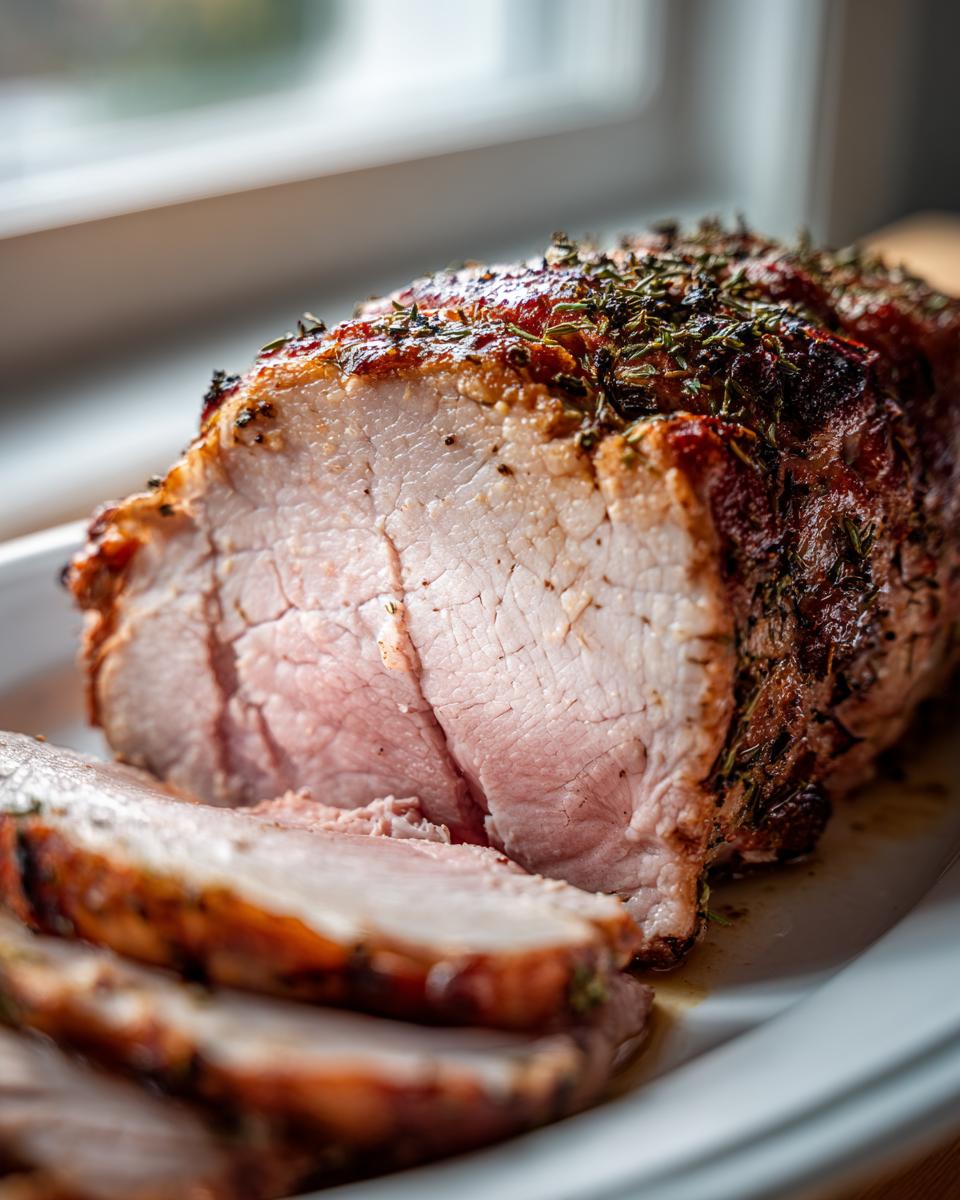
This is the moment most people rush, and it’s the #1 reason their roast ends up dry! When your **pork loin roast** hits 145°F, get it out and put it on a cutting board. Don’t you dare touch that knife yet! Loosely tent that meat with foil—don’t wrap it tight, just loosely cover it to keep the heat in. It needs at least 10 full minutes to rest. During that time, the juices that have been forced toward the center while cooking redistribute back out into the meat fibers. If you cut it early, all that gorgeous moisture just spills all over your cutting board. Don’t waste it! After the rest, then you slice against the grain for the ultimate **juicy pork loin**.
Making a Simple Pan Sauce Gravy for Your Pork Loin Roast
Now that we have the perfectly rested, **juicy pork loin roast**, we absolutely cannot waste those incredible little brown bits stuck to the bottom of your roasting pan! If you’re serving this up for a **sunday roast recipe**, you need a little gravy—and making a **pan sauce gravy** from these drippings is so easy it feels like cheating.
You only need three more things: a little bit of flour, some chicken broth, and you’ll do this right on the stovetop. It brings everything together and makes your **easy pork dinner** taste ridiculously gourmet.
Here is how you whip up that quick sauce while the roast is still resting:
- Move your roasting pan right onto the stovetop burner. Put the heat on medium—not high, we don’t want to burn anything!
- Take a wooden spoon or a whisk and just start scraping up all those dark, flavorful brown bits that are stuck to the bottom, which we call the ‘fond.’ Those are pure flavor!
- Sprinkle in about one tablespoon of all-purpose flour right over those drippings and bits. Whisk it constantly for about a minute, just long enough for the flour to cook down a little bit. It will look kind of pasty, and that’s great.
- Slowly, and I mean slowly, whisk in about one cup of chicken broth. Keep whisking as you pour! This stops any lumps from forming.
- Let it bubble gently. It will thicken up surprisingly fast as it reduces down with the flour. You want it thick enough to coat the back of a spoon, but still pourable. Taste it! Usually, it’s salty enough from the roast drippings, but feel free to add a tiny pinch more salt or pepper if your heart tells you to.
Drizzle that rich **pan sauce gravy** right over your sliced pork loin roast. Honestly, this step is what elevates dinner from good to company-worthy, and it took maybe five minutes total!
Tips for Success When Making Pork Loin Roast
Now we’re at the part where I try to save you from any potential rookie mistakes I might have made when I was first starting out! Even with this simple recipe, a couple of little details can really separate a good **oven roasted pork** from an absolute show-stopper that earns you bragging rights.
These aren’t complicated cooking tricks; they are just things I learned over years of trying to get that perfect **juicy pork loin** for my family. Mastering these small details is what separates following a recipe from truly understanding how the meat cooks.
Thermometer Placement Matters More Than You Think
I preach about that instant-read thermometer because it’s the most reliable tool we have, but you can still get a bad reading if you place it wrong! When you stick that thermometer into your **pork loin roast**, you have to be super careful where the tip lands. You want the very center of the roast—that’s where the thickest part usually is.
What you absolutely must avoid is hitting bone, even if your roast is bone-out sometimes there are little bits leftover, or worse, touching the bottom of your roasting pan. If you hit bone, the thermometer reads the bone’s temperature, and the bone heats up faster than the meat around it. That will tell you the pork is done when it is still totally raw in the middle! Always aim for the deepest pocket of meat, far away from fat pockets or the pan bottom, to get that true **pork loin internal temp** of 145°F.
Slicing Against the Grain for Max Tenderness
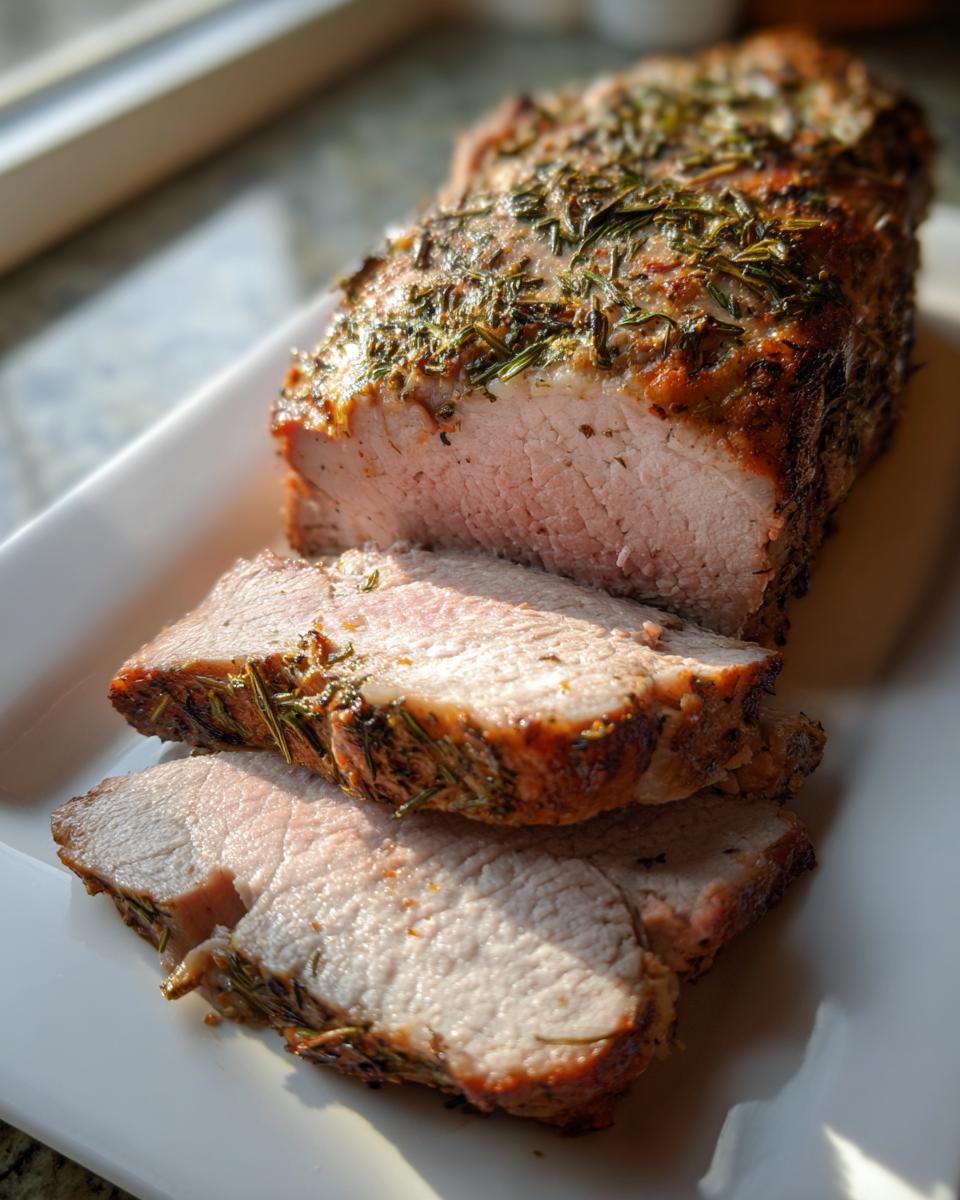
You’ve rested your **pork loin roast**—great job! Now don’t ruin all that hard work by slicing it the wrong way. This is true for any roast, but especially for leaner cuts like pork loin. You need to look closely at the meat after it’s rested and figure out which way the muscle fibers run. They look like little parallel lines going across the roast.
For the most tender chew, you have to slice *perpendicular* to those lines—that’s called slicing “against the grain.” If you slice with the grain, you end up with long, tough strings of meat that might as well be shoe leather! Slicing against it shortens those muscle fibers, making every single bite melt in your mouth. It’s the final, crucial step for guaranteeing that **juicy pork loin** experience!
Frequently Asked Questions About Your Pork Loin Roast
I know when I’m looking up a new recipe, I always have a million little questions bouncing around in my head. Are we sure about the time? Can I skip a step? I tried to cover the big ones here, but honestly, if you have any other doubt about making this **easy pork dinner**, just ask! We’re all learning together in the kitchen.
What is the best internal temperature for a juicy pork loin roast?
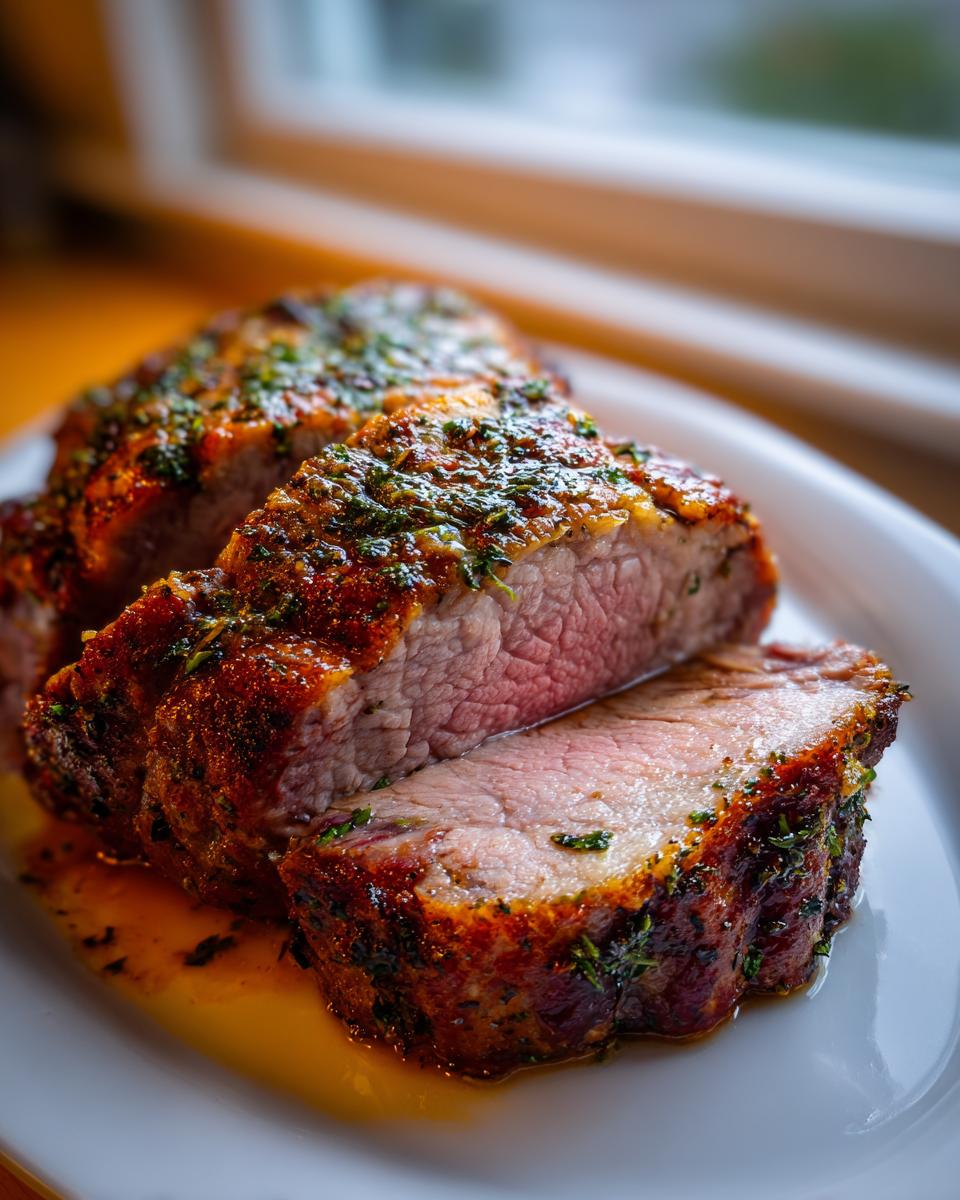
This is the question I get asked the most, and it’s the most important one for a perfectly **juicy pork loin roast**! The final, safe temperature for pork loin is exactly 145 degrees Fahrenheit when measured with an instant-read thermometer. But here’s the secret again: you have to pull it out of the oven when it hits that 145°F. It will continue to rise slightly (carryover cooking) while it rests, and that crucial 10-minute rest ensures all those juices stay locked inside. Seriously, 145°F followed by a rest is the golden key for a tender **oven roasted pork**!
Can I use this recipe for a weeknight dinner?
Absolutely, yes! That’s one of the main reasons I simplified this **pork loin roast** recipe the way I did. When you look at the total time, yes, it’s about an hour from start to finish, but your active time—the time you’re actually standing there mixing the rub, putting it in the oven, and making the quick **pan sauce gravy**—is less than 20 minutes total. You can mix the rub while your oven preheats, pop it in, and use those 45 minutes of roasting time to quickly make a salad or set the table. It makes a fantastic **weeknight dinner** that tastes way more special than the effort required!
My roast is 4 pounds instead of 3. How do I adjust the cooking time?
No worries at all if your grocery store only had a bigger cut! The meat itself dictates the time, not the recipe proportions for the rub. You’ll stick to the same initial blast at 400°F for 15 minutes. But after you drop the heat to 350°F, you need to adjust the calculation. The general rule of thumb for **oven roasted pork** is 20 to 25 minutes per pound. So if you have a 4-pound roast, you’re probably looking at another 80 to 100 minutes total roasting time at the lower temperature. Always, always, always rely on that thermometer to tell you when it hits the perfect **pork loin internal temp** of 145°F.
How do I make sure my pan sauce gravy isn’t lumpy?
Lumps happen to the best of us! The secret to a super smooth **pan sauce gravy** is the speed at which you add the liquid. After you whisk in the flour and cook it for that minute (we call that making a quick roux), don’t just dump the cup of broth in! Pour about a quarter cup in first and whisk like crazy until it forms a thick, smooth paste. Only *then* should you start adding the remaining broth slowly while continuing to whisk. This lets the starch hydrate gently instead of clumping up instantly. Works every time!
Storage and Reheating Instructions for Leftover Pork Loin Roast
First, let’s celebrate! You have leftovers of what I hope is the juiciest **pork loin roast** you’ve ever made. That’s the beauty of a roast—it tastes amazing the next day too! But leftovers need a little love if you want them to retain that moisture we worked so hard to lock in during roasting.
This is honestly one of the easiest **easy pork dinner** solutions for the next day, but the key here is gentleness. You want to avoid anything that will blast the meat with high heat and suck the remaining moisture right out.
How to Properly Store Your Leftover Pork Loin
The number one rule for storing any leftover roast, especially a leaner cut like pork loin, is cutting it right before you store it. If you leave the meat whole, it insulates itself and keeps better. However, since most people slice every bit of their **pork loin roast** right after dinner, we need to protect those exposed slices!
- Slice it thin, and place those slices into a good quality, airtight container. Seriously, use a container that seals well, not just plastic wrap stretched over a plate. You want zero air exposure.
- If you did make that incredible **pan sauce gravy**, store it in a completely separate container! Storing the meat drenched in liquid tends to make the dried slices greasy or mushy when you go to reheat them later. Keep the gravy separate so you can control the moisture during reheating.
- Tuck that container into the fridge. If stored properly, this pork loin will keep well for 3 to 4 days. Honestly, I usually try to use it up within three days.
Reheating Gently for a Juicy Pork Loin Finish
The goal when reheating is to add moisture back in, not to cook the meat further. If you throw these slices into a hot oven or blast them in the microwave, you will instantly dry out that gorgeous, tender texture we perfected when aiming for that 145°F **pork loin internal temp**.
My preferred method is actually back on the stovetop, treating leftovers almost like a simmer:
- Take your thin slices of **pork loin roast** and put them in a skillet over medium-low heat.
- Pour just a splash—maybe a couple of tablespoons—of chicken broth or water into the pan with the pork. You just need enough liquid to create steam. You don’t want to drown it!
- Cover the skillet tightly with a lid. Let it warm through slowly. The steam traps moisture, gently warming the slices without drying them out. This usually takes just 4 to 6 minutes total.
- If you saved your **pan sauce gravy**, heat that up separately in a small saucepan and spoon it over the warmed pork loin right before serving.
If you absolutely must use the microwave (I won’t judge!), place the slices on a microwave-safe plate and put a damp paper towel right over the top of the meat before heating it in short 30-second bursts until just warmed through. It’s not as good as the stovetop method, but it beats cold pork!
Serving Suggestions for Your Oven Roasted Pork
So, you’ve got this beautiful, juicy **pork loin roast** resting perfectly, and you’ve maybe whipped up a quick **pan sauce gravy**. Awesome! Now we have to address the elephant in the kitchen: what goes with it? Since this recipe is all about keeping things simple and fast, we don’t want to commit to side dishes that take an hour of complicated chopping and simmering, right?
I always aim for sides that can either roast alongside the pork or just require a quick steam. That way, everything finishes at the same time, and you’re not running around like a maniac trying to brown Brussels sprouts while slicing the roast. This is what I usually pull out of the fridge or pantry when I’m serving this **easy pork dinner** for the family.
The Perfect Starch: Keeping it Simple
For an **oven roasted pork**, you absolutely should lean into roasted vegetables because they use the same high-heat environment, meaning less cleanup and more flavor infusion!
- Garlic Herb Roasted Potatoes: My absolute favorite pairing. Toss small chunks of potatoes with the same little rub we used on the pork—olive oil, salt, pepper, and dried thyme. Throw them onto the rimmed baking sheet *around* the roasting pan (or in a separate pan if space is tight) about 15 minutes after the pork goes in. They get crispy on the outside and fluffy inside, matching the roast perfectly.
- Mashed Cauliflower: If you’re trying to keep things lower carb or just want something creamy without the heavy milk and butter of traditional mash, steam some cauliflower until super tender. Mash it with a splash of olive oil and a pinch of salt until smooth. It’s surprisingly light but still feels very comforting alongside that rich **pan sauce gravy**.
Vegetables That Don’t Demand Too Much Attention
When I’m planning a **weeknight dinner**, I need the vegetable to be a dump-and-go situation. These two are my champions for pairing with a flavorful **pork loin roast**.
- Blanched Green Beans with Lemon: This is faster than roasting! Just boil some water, drop the trimmed green beans in for three minutes until they turn bright green (that’s blanching!), then immediately dunk them into a bowl of ice water—stop that cooking fast! Right before serving, warm them up quickly in a little butter and squeeze fresh lemon juice over them. The bright acid cuts through the richness of the pork and gravy beautifully.
- Roasted Asparagus: If you have room in the oven during the final 15 minutes of the **pork loin roast** cook time, asparagus is perfect. Toss the spears with a drizzle of oil, salt, and maybe some grated Parmesan if you’re feeling fancy. They cook fast and taste amazing when they get just a little char on the tips.
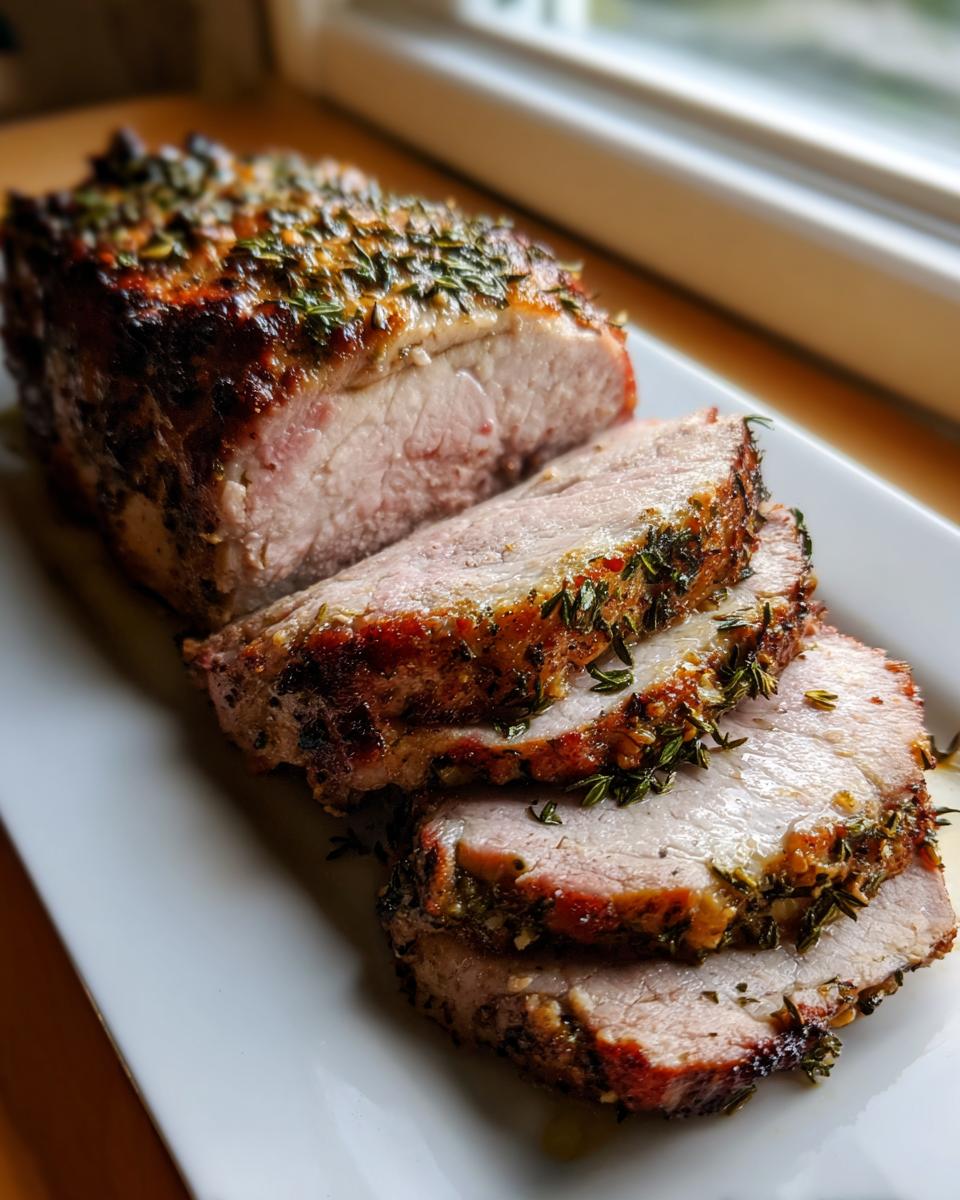
Honestly, with a flavorful roast like this, you don’t need five sides. Pick one starch and one green veggie, and you’ve got a complete, delicious **sunday roast recipe** experience in minimal time!
PrintSimple Juicy Pork Loin Roast
A straightforward recipe for oven-roasted pork loin that results in a tender, juicy roast, perfect for weeknight meals or a Sunday dinner.
- Prep Time: 10 min
- Cook Time: 60 min
- Total Time: 70 min
- Yield: 6 servings 1x
- Category: Dinner
- Method: Oven Roasting
- Cuisine: American
- Diet: Low Fat
Ingredients
- 3 lb pork loin roast, bone out
- 1 tablespoon olive oil
- 1 teaspoon kosher salt
- 1 teaspoon black pepper
- 1 teaspoon garlic powder
- 1 teaspoon dried thyme
Instructions
- Preheat your oven to 400 degrees Fahrenheit.
- Pat the pork loin roast dry with paper towels. This helps the outside brown.
- In a small bowl, mix the olive oil, salt, pepper, garlic powder, and thyme to create a rub.
- Rub the seasoning mixture evenly over the entire surface of the pork loin.
- Place the seasoned roast in a roasting pan or on a rimmed baking sheet.
- Roast for 15 minutes at 400 degrees Fahrenheit.
- Reduce the oven temperature to 350 degrees Fahrenheit. Continue roasting until an instant-read thermometer inserted into the thickest part registers 145 degrees Fahrenheit. This usually takes about 20 to 25 minutes per pound total cooking time.
- Remove the pork loin from the oven when it reaches 145 degrees Fahrenheit internal temperature.
- Tent the roast loosely with foil and let it rest on a cutting board for at least 10 minutes before slicing. This resting period is key for a juicy pork loin.
- Slice against the grain into serving portions.
- If desired, make a quick pan sauce using the drippings in the roasting pan.
Notes
- For a pan sauce gravy, place the roasting pan over medium heat on the stovetop. Scrape up any browned bits from the bottom. Whisk in 1 tablespoon of flour, cook for one minute, then slowly whisk in 1 cup of chicken broth until thickened.
- The final internal temperature for safe and tender pork is 145 degrees Fahrenheit followed by a 3-minute rest.
- You can substitute dried rosemary for dried thyme if you prefer.
Nutrition
- Serving Size: 4 oz cooked
- Calories: 280
- Sugar: 1
- Sodium: 350
- Fat: 12
- Saturated Fat: 4
- Unsaturated Fat: 8
- Trans Fat: 0
- Carbohydrates: 0
- Fiber: 0
- Protein: 40
- Cholesterol: 95