Classic Sauerkraut Recipe: Easy Fermented Cabbage for a Happy Home
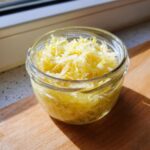
Learn how to make DIY homemade sauerkraut using simple lacto fermentation. This traditional recipe yields natural probiotic food perfect for your busy life.
- Prep Time: 30 min
- Cook Time: 0 min
- Total Time: 30 min (plus 1-4 weeks fermentation)
- Yield: About 2 quarts 1x
- Category: Side Dish
- Method: Lacto Fermentation
- Cuisine: American
- Diet: Vegan
Ingredients
Scale
- 5 lbs green cabbage
- 3 tablespoons non-iodized salt (sea salt or kosher salt)
- Optional: 1 teaspoon caraway seeds
- Optional: 1/2 teaspoon juniper berries
Instructions
- Remove the outer, damaged leaves from the cabbage heads. Reserve one or two whole outer leaves.
- Cut the cabbage into quarters and remove the core from each quarter.
- Shred the cabbage finely using a sharp knife or a food processor with a shredding disc.
- Place the shredded cabbage in a very large bowl. Sprinkle the salt evenly over the cabbage.
- Massage the salt into the cabbage using clean hands for 5 to 10 minutes. The cabbage will begin to release liquid and soften significantly.
- If using, add caraway seeds or juniper berries now and mix well.
- Pack the salted cabbage tightly into a clean, wide-mouth glass jar (a half-gallon or gallon jar works well). Press down firmly to force the brine (liquid) to rise above the cabbage. The brine must cover the cabbage completely.
- If the brine does not cover the cabbage, use a piece of the reserved outer leaf to press the shredded cabbage down. If needed, mix a small amount of extra salt brine (1 teaspoon salt dissolved in 1 cup of filtered water) and pour enough over the top to cover everything by at least one inch.
- Place an airlock fermentation lid or a standard lid loosely on top of the jar to allow gases to escape.
- Place the jar in a cool, dark place (ideally 60-70°F or 15-21°C) away from direct sunlight.
- Check the jar daily for the first week. Press the cabbage down if necessary to keep it submerged. You should see bubbles forming, indicating active fermentation.
- Ferment for 1 to 4 weeks. Taste it after 7 days. If you prefer a milder flavor, let it ferment longer. For a quick cabbage pickle, 7 days may be enough.
- Once the flavor is to your liking, seal the jar tightly and move it to the refrigerator for long term vegetable preservation. This stops the fermentation process.
Notes
- Use only non-iodized salt; iodine can inhibit the beneficial bacteria growth needed for lacto fermentation.
- If you see white film (kahm yeast) on the surface, you can usually skim it off without issue, provided the liquid remains clear and there is no fuzzy mold.
- If you see fuzzy, colored mold (black, pink, or green), discard the batch and clean your equipment thoroughly before starting again.
- Homemade sauerkraut is a healthy gut food recipe that pairs well with sausages, potatoes, or sandwiches.
Nutrition
- Serving Size: 1/4 cup
- Calories: 25
- Sugar: 1
- Sodium: 300
- Fat: 0
- Saturated Fat: 0
- Unsaturated Fat: 0
- Trans Fat: 0
- Carbohydrates: 5
- Fiber: 2
- Protein: 1
- Cholesterol: 0