Easy Homemade Raspberry Jam Without Pectin
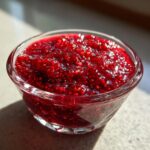
Make this bright, flavorful raspberry jam with just three simple ingredients. This recipe is perfect for spreading on toast, layering in desserts, or topping yogurt.
- Prep Time: 15 min
- Cook Time: 25 min
- Total Time: 40 min
- Yield: About 3 half-pint jars 1x
- Category: Preserves
- Method: Stovetop Cooking/Water Bath Canning
- Cuisine: American
- Diet: Vegetarian
Ingredients
Scale
- 2 pints fresh or frozen raspberries
- 3 cups granulated sugar
- 1 tablespoon fresh lemon juice
Instructions
- Prepare your jars: If water bath canning, sterilize your jars and keep them hot. If making freezer jam, ensure your containers are clean and ready.
- Combine raspberries and sugar in a large, heavy-bottomed pot. Let the mixture sit for 15 minutes to allow the sugar to draw out the juices from the berries.
- Place the pot over medium-high heat. Stir constantly until the sugar dissolves completely and the mixture begins to boil.
- Once boiling, add the lemon juice. Continue to boil, stirring frequently to prevent scorching on the bottom of the pot. Do not stir down the sides of the pot once boiling begins.
- Use a candy thermometer or test for the setting point. The jam is ready when it reaches 220 degrees Fahrenheit (104 degrees Celsius) or when a small spoonful dropped onto a chilled plate wrinkles when pushed. This usually takes 15 to 20 minutes of active boiling.
- Remove the pot from the heat. Skim off any foam that has formed on the surface using a metal spoon.
- For canning: Carefully ladle the hot jam into the hot, sterilized jars, leaving 1/4 inch of headspace. Wipe the rims clean, apply the lids and rings, and process in a boiling water bath for 10 minutes, adjusting for altitude. Let the jars cool completely to seal.
- For freezer jam: Pour the jam into clean freezer-safe containers, leaving 1/2 inch of headspace. Let cool to room temperature, then cover and freeze for up to one year.
Notes
- This recipe uses the natural pectin in the fruit and lemon juice to set the jam.
- If you prefer seedless raspberry jam, gently press the cooked mixture through a fine-mesh sieve before the final boil, then return the strained liquid to the pot to finish cooking.
- For best results when canning, use fresh, ripe berries at their peak.
Nutrition
- Serving Size: 2 tablespoons
- Calories: 100
- Sugar: 26
- Sodium: 1
- Fat: 0
- Saturated Fat: 0
- Unsaturated Fat: 0
- Trans Fat: 0
- Carbohydrates: 26
- Fiber: 1
- Protein: 0
- Cholesterol: 0
Find it online: https://miameal.com/easy-raspberry-jam-recipe-no-pectin/