Ultimate Beginner’s Guide: How to Make and Maintain a Healthy Sourdough Starter From Scratch
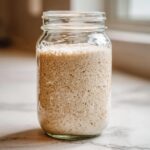
Learn how to create your own natural yeast culture for artisan bread making. This guide covers the simple steps for beginners to make a bubbly, active sourdough starter using only flour and water.
- Prep Time: 5 min
- Cook Time: 0 min
- Total Time: 7 days (for initial creation)
- Yield: 1 active starter culture 1x
- Category: Baking Base
- Method: Fermentation
- Cuisine: American
- Diet: Vegetarian
Ingredients
Scale
- 100g Whole Wheat or Rye Flour (for initial activation)
- 100g Unbleached All-Purpose Flour (for maintenance)
- 100g Unchlorinated Water (room temperature)
Instructions
- Combine 50g of whole wheat or rye flour with 50g of room temperature water in a clean glass jar. Stir well until no dry flour remains. Cover loosely and let it sit at room temperature (ideally 70-75°F) for 24 hours.
- On Day 2, discard half of the mixture. Add 50g of all-purpose flour and 50g of water to the remaining starter. Mix thoroughly, cover loosely, and wait another 24 hours.
- Repeat the feeding process (discard half, feed 50g flour, 50g water) every 24 hours for Days 3 through 6. You should start seeing small bubbles.
- By Day 7, if your starter is consistently doubling in size within 6-8 hours after feeding, it is considered active and ready to use for baking your first sourdough loaf.
- To maintain your active starter, switch to a daily feeding schedule if keeping it on the counter, or refrigerate it and feed it once per week.
Notes
- Use unbleached flour for the best results when creating your natural yeast culture.
- If you notice a layer of dark liquid (hooch) on top, stir it in or pour it off before feeding. This means your starter is hungry.
- A consistent feeding schedule is key to developing a strong, bubbly active starter.
- If you are baking infrequently, store your starter in the refrigerator and feed it the day before you plan to bake.
Nutrition
- Serving Size: 50g
- Calories: 100
- Sugar: 0.1
- Sodium: 1
- Fat: 0.3
- Saturated Fat: 0.1
- Unsaturated Fat: 0.2
- Trans Fat: 0
- Carbohydrates: 20
- Fiber: 1
- Protein: 3
- Cholesterol: 0
Find it online: https://miameal.com/sourdough-starter-guide-beginners/